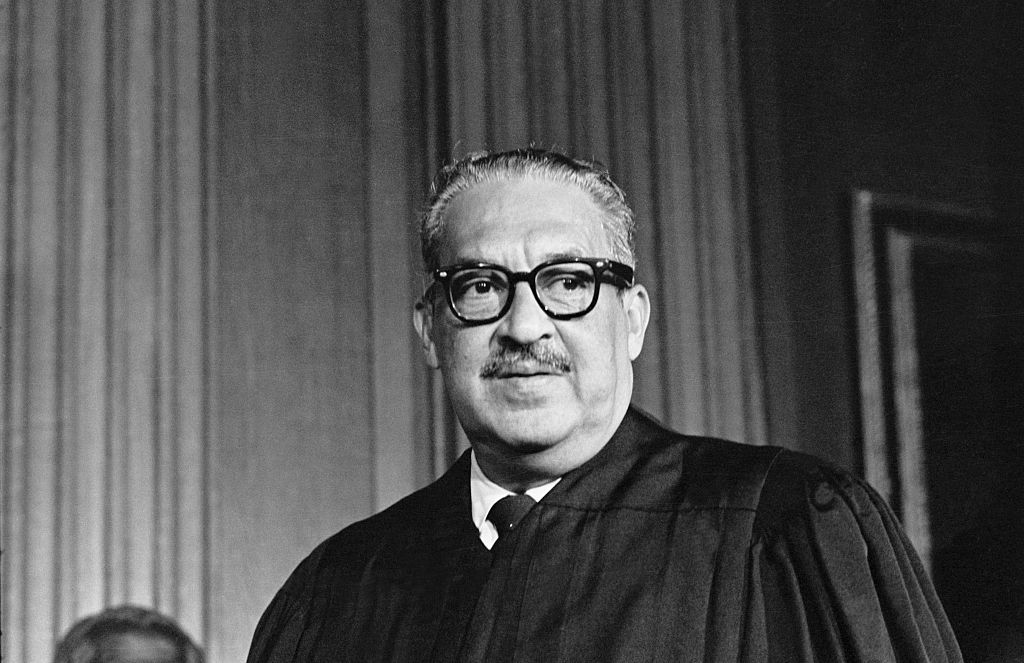

Thurgood Marshall is recognized most notably as the first Black Supreme Court Justice; however, Marshall has a lengthy track record of historic accomplishments, especially in the arena of law. A United States Solicitor General and a civil rights lawyer, Thurgood Marshall set the stage for Black representation in federal law positions for attorneys and aspiring attorneys in the 21st century.
On July 2nd, 1908, in Baltimore, Maryland, Thurgood Marshall was born “Thoroughgood Marshall” to William Canfield Marshall, a railroad porter and steward at an all-white country club, and Norma Arica Williams, an elementary school teacher. It is often noted that Marshall’s father instilled Marshall’s interest in law and the Constitution. Marshall’s father would often take him and his siblings to watch court cases and discuss the events afterward.
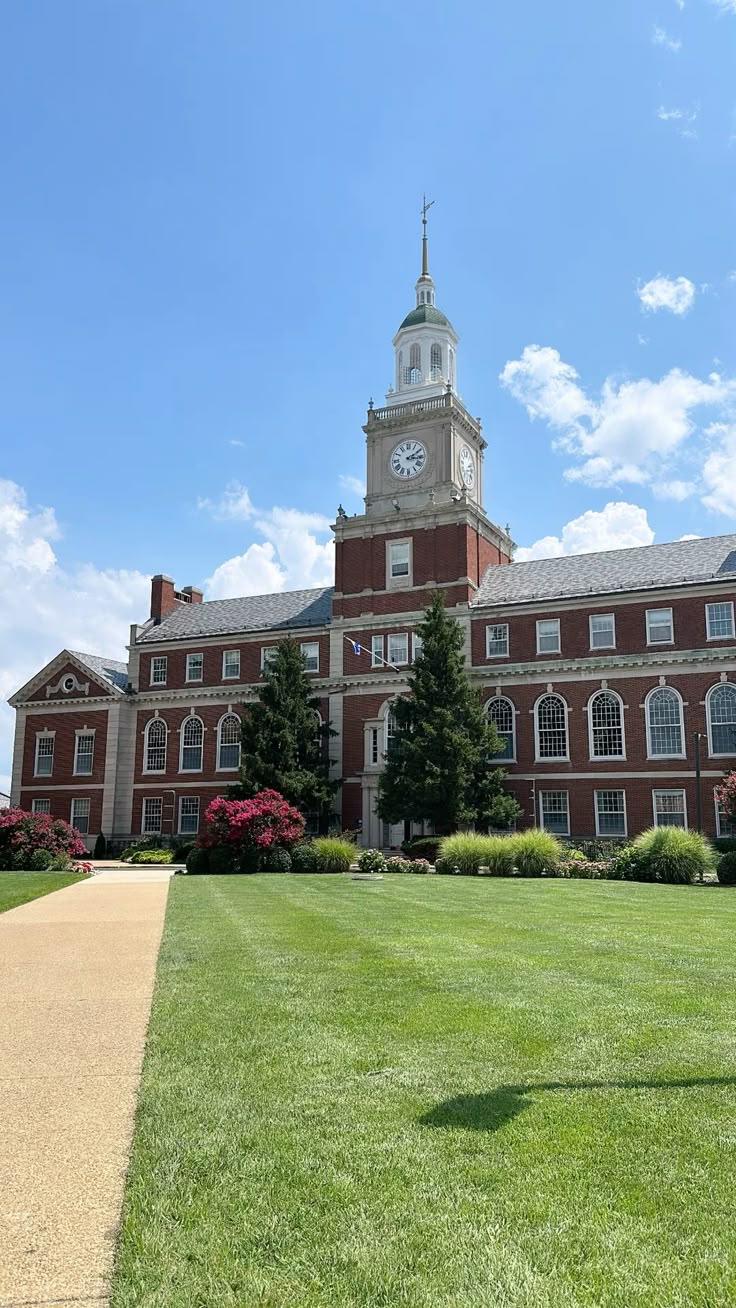
In his formative years, Lincoln attended Frederick Douglass High School in Maryland, graduating in 1925. Marshall’s post-secondary education began at Lincoln University, the oldest African American institution for higher education in the United States, where Marshall majored in American Literature and Philosophy. Among Marshall’s classmates were Langston Hughes and future civil rights activist Kwame Nkrumah. Graduating Cum Laude from Lincoln University in 1933, Thurgood Marshall applied to the University of Maryland School of Law; however, he was rejected because of his race. Marshall went on to pursue his Juris Doctorate from the Howard University School of Law, and it is noted that his parents were so supportive of his education that they pawned their engagement ring to help cover Marshall’s tuition.

While attending Howard School of Law, Marshall was heavily influenced by the work and mentorship of Charles Hamilton Houston, civil rights lawyer and then Dean of the Howard University School of Law. Shortly after graduating top of his class in 1933, Marshall made his way into the fight for civil rights, joining mentor Charles Hamilton Houston in a case against the very school that rejected him: the University of Maryland School of Law. In Murray v. Maryland (1936), Marshall and Houston argued that race-based admissions were unconstitutional, citing the 14th Amendment, which prohibits discrimination based on race or former enslaved status.
Marshall and Houston were successful, and Marshall would continue his endeavor as a civil rights lawyer by joining Houston as a staff lawyer for the National Association for the Advancement of Colored People (NAACP) in 1936. During his tenure with the NAACP, Marshall litigated Missouri ex rel Gaines v. Canada (1938). By 1940, Marshall had risen to Chief Counsel in the NAACP Legal Defense and Education Fund, an organization created to challenge segregationist policies.
As a leading civil rights attorney during the height of the Civil Rights Movement, Marshall is credited with arguing several landmark cases concerning racial equality. Marshall successfully argued that Texas’s white-only primaries were illegal in Smith v. Allwright (1944), where Blacks were excluded from voting in primary elections. Marshall successfully argued against restrictive race-based house covenants in Shelly v. Kraemer (1948). Marshall also successfully argued against segregated law libraries, professional, and graduate facilities for students in Sweatt v. Painter (1950).

Thurgood Marshall is best known for successfully winning the case of Brown v. Board of Education (1954). Overturning the widely accepted United States Supreme Court case Plessy v. Ferguson (1896) ruling, Marshall successfully argued to the United States Supreme Court that segregated public education facilities under the “separate but equal” doctrine were unconstitutional. Brown v. Board of Education (1954) has far-reaching implications, ending segregation in public facilities nationwide.
Leading the legal fight for civil rights, Marshall was nominated by President John F. Kennedy to the U.S. Court of Appeals for the Second Circuit in 1961. Six years later on August 30th, 1967, Thurgood Marshall was appointed by President Lyndon B. Johnson to the United States Supreme Court. Upon confirmation by the U.S. Senate, Marshall became the first African- American Supreme Court Justice. Justice Marshall served until 1991, stepping down due to health concerns. Marshall’s lengthy and accomplished career earned him the moniker of “Mr. Civil Rights.”


Leave a Comment